


 English Malay
  China
China  Türkiye
  France
  Spain
Spain  Vietnamese
  Thailand
  India
India  Русский
  Japan
Japan  Arabic
  Mexico
  Peru
Peru  Argentina
  Korea
Korea  Eng-Canada
  Cambodia
  Philippines
  Bangladesh
  Hong Kong
  Australia
  Singapore
  Colombia
  Iran
Iran 
Time is essential in the quick-paced realm of forex trading. Building a good trading strategy depends on knowing the many trading sessions, their features, and how they overlap regardless of your level of expertise. This guide will walk you through an in-depth review of the forex market, clarify the importance of trading hours, and provide doable advice to maximize every trading day.
Overview of Forex Trading.
With an average daily trading volume of some trillion US dollars, forex, or foreign exchange, is the largest financial market in the world. The FX market is dispersed and runs 24 hours a day, five days a week unlike stock markets, which follow a particular time zone. A global network of banks, brokers, and financial institutions scattered across time zones makes this round-the-clock activity feasible.
Some important aspects of the FX market include:
- High liquidity: Because of its high daily turnover, traders benefit from deep liquidity, making it simpler to join and exit trades.
- Global reach: Forex trading is not restricted by geographic borders. Instead, it links many financial hubs throughout the globe.
- Leverage and volatility: While the market provides chances for big returns via leverage, it also has tremendous volatility, necessitating prudent risk management.
Understanding how these variables function together during trade hours is critical. You may increase your profit potential while reducing risks by timing your transactions at moments of high liquidity and volatility.
What Are Forex Trading Hours?
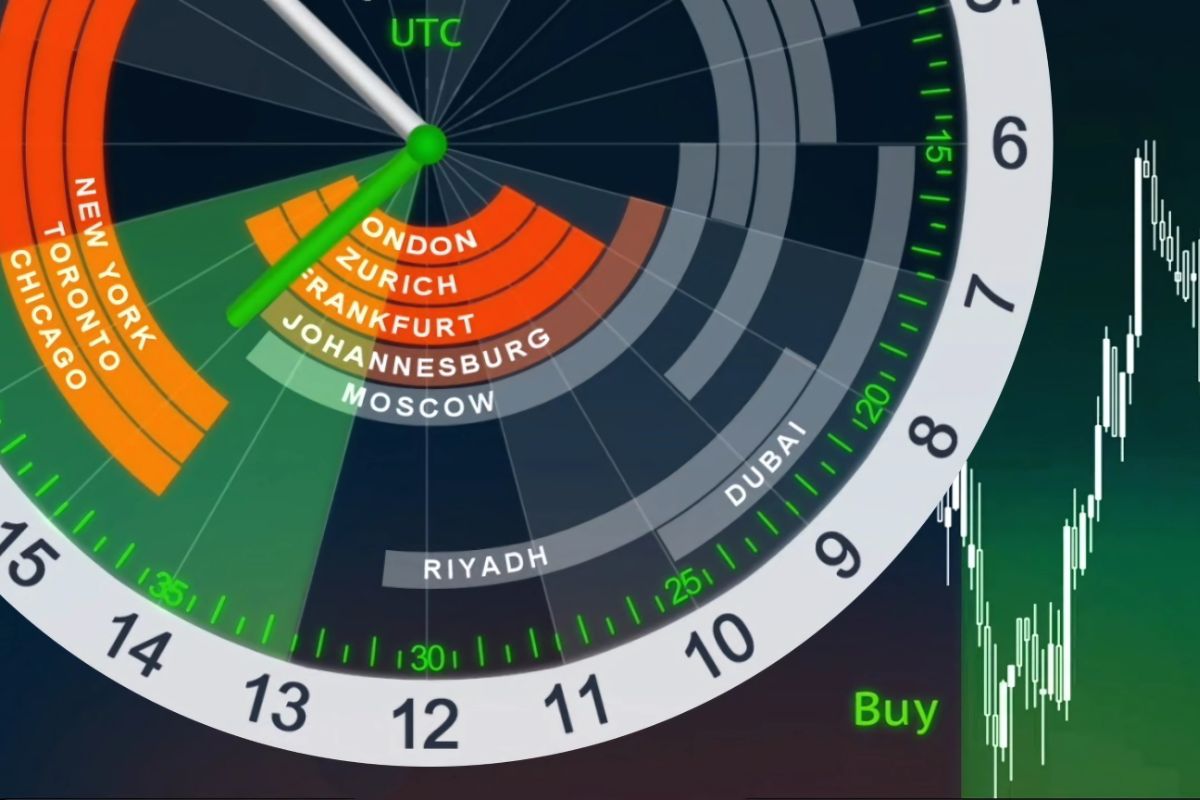
Forex trading hours correspond to the specific times when different financial centers all across the world are open for business. Because of the sequential opening of markets in Sydney, Tokyo, London, and New York, the forex market is constantly active throughout the week unlike other markets with one opening and closing time.
Understanding the trading hours assists you to:
- Optimize your trading strategy: By timing your transactions during the most busy times, you may boost your chances of seeing positive market movements.
- Reduce risks: Understanding when market liquidity is low might help you avoid times of unanticipated volatility.
- Plan your trading day: Whether you’re a day trader or a swing trader, knowing these periods can help you organize your transactions more efficiently.
We will review each significant trading session in the next sections, analyze their unique characteristics, and explain why overlap periods might be very successful.
Global Forex Trading Hours: Major Trading Sessions
The currency market is open twenty-four hours a day, five days a week due to its global nature and the many time zones of important financial hubs. Four primary trading sessions— Sydney, Tokyo, London, and New York—break out this constant operation. The economic activities of the surrounding communities affect the unique qualities and peak activity hours of every session. Traders trying to improve their performance depend on knowing these sessions and their overlaps.
The Sydney Sessions (Australia)
Time: 22:00 to 06:00 GMT.
The Sydney session marks the beginning of the forex trading week. Despite being the least turbulent session, it provides a steady atmosphere for establishing positions. This session is especially crucial for trading pairings with the Australian Dollar (AUD) and New Zealand Dollar (NZD).
Key points:
- Lower liquidity: Trading volumes are lower than in past sessions, perhaps leading to smaller price moves.
- Market kickoff: This session sets the tone for the rest of the week, with early trends often serving as the foundation for subsequent sessions.
- Strategic use: Traders seeking a tranquil market environment may concentrate on long-term trends at this time.
The Tokyo Session (ASIA)
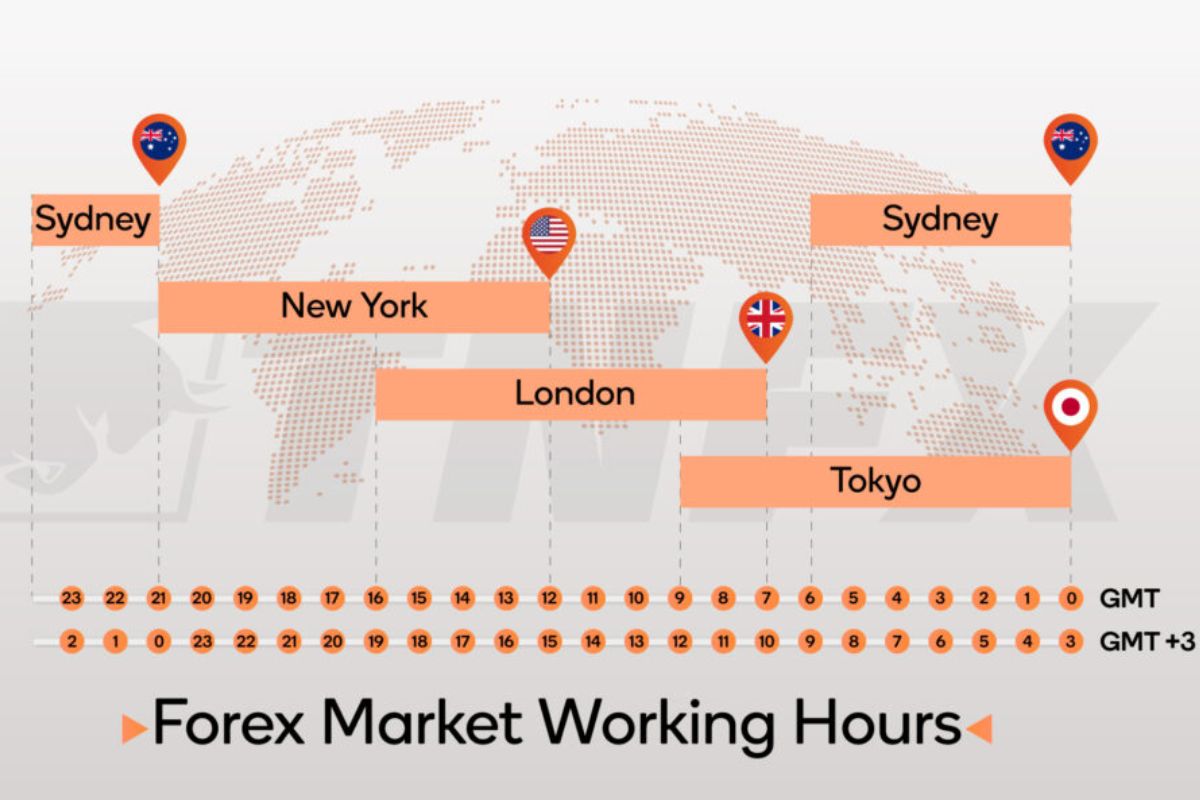
Time: 23:00 to 07:00 GMT.
The Tokyo session follows Sydney as the next major market to start. This time is especially crucial for people who trade the Japanese yen (JPY) and other Asian currencies. The Tokyo session is often somewhat volatile and serves as a transition from the earlier session’s slower pace.
Key points:
- Active JPY trading: Currency pairings like USD/JPY and EUR/JPY often experience higher activity.
- Moderate volatility: The session strikes a balance between calm market conditions and reasonable price swings.
- Preparation for overlap: As the session comes to a conclusion, traders begin to position themselves for the impending European session.
The London session (Europe)
Time: 07:00-15:00 GMT.
The London session is considered the most busy and liquid time in the currency market. With many important banks and financial institutions situated in Europe, this session draws large trading volumes, resulting in considerable volatility and multiple trading possibilities.
Key points:
- High liquidity: The sheer number of transactions helps to lower spreads and increase price stability.
- Diverse opportunities: Major currency pairings, such as EUR/USD and GBP/USD, show substantial change.
- Ideal for many strategies: The London session provides several possibilities for both scalpers and swing traders.
The New York Session (USA)
Time: 12:00 to 20:00 GMT.
The New York session is crucial for traders concentrating on the US dollar and associated currency pairings. This session sometimes overlaps with the London session, resulting in a period of unusual liquidity and volatility.
Key points:
- Increased activity: The overlap with London causes a rise in trade activity.
- Economic pronouncements: Major economic data including central bank comments and employment numbers will be published this session.
- Market impact: The later price adjustments might provide risks as well as possibilities for traders, hence careful attention is needed.
Tips to Trade Effectively on Forex Trading Hour Worldwide
Knowing the clock isn’t enough; you also need to understand how to use this knowledge to better your trading technique. Here are some practical suggestions for trading well during forex trading hours.
Adapt Your Strategy to Market Sessions

Various trading techniques may be more successful during certain sessions:
Scalping works best during the London session, when volatility is strong and spreads are tight.
- Day trading: The London-New York overlap is great since the market has more activity and more frequent price fluctuations.
- Swing trading: Some traders prefer to monitor the general trend during calmer sessions such as Sydney and Tokyo, intending to initiate positions when the more turbulent European and US sessions begin.
Use Reliable Trading Tools
Modern forex traders might manage the challenges of trading hours using many internet tools and platforms:
- Forex market time converters: These help you to quickly translate GMT timings into your local time zone so you never miss any significant trading chances.
- Economic calendars: Websites as Forex Factory and Investing.com provide current information about forthcoming economic events.
- Technical analysis platforms: Trading platforms with strong charting capabilities might enable you to find trends and instantly mark entrance and exit points in technical analysis.
- Copy trading platform: Platforms like WeCopyTrade let you mechanically replicate the transactions of experienced traders, therefore benefiting from skilled strategies and effectively managing risk.
Adapt to Seasonal Time Changes
Many places use Daylight Saving Time (DST), which could influence trading session plans. Maintaining knowledge of these developments is essential as neglect to do so could lead to trading during unanticipated low liquidity moments. Change your trading plan suitably, and make sure your calendars and tools show these time changes.
Follow Global News
The FX market may be much influenced by political elections, natural disasters, and geopolitical crises as well as by governmental policies. Regularly check global news sources to get ahead of any occurrences that can affect your trading plans. This better knowledge might help you benefit on changes in the market and prevent unexpected losses.
Practice Risk Management
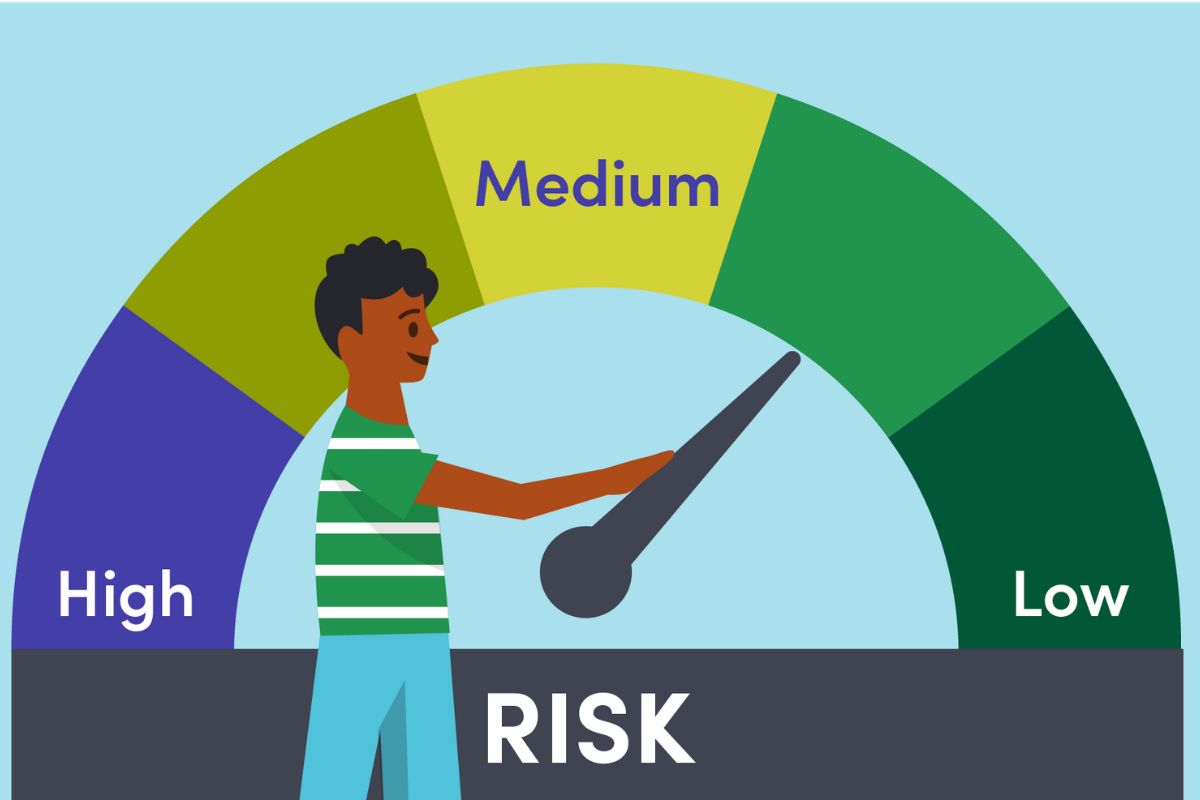
Effective risk management is the foundation of every successful trading strategy. Even during peak trading hours, market volatility is unpredictable. Always:
- Set stop-loss orders: Set stop-loss orders to minimize your losses if the market goes against your position.
- Use take-profit orders: Protect your profits by establishing specified levels at which you will leave a transaction.
- Diversify your portfolio: Avoid excessive exposure to a single currency pair. Spread your risk over numerous pairings to reduce possible losses.
Conclusion
The forex market’s continuous operation throughout many worldwide sessions provides traders with unique opportunity to gain on currency swings. Traders may improve their decision-making processes by tailoring their trading tactics to the unique variables of each session. Using dependable tools, such as time converters and economic calendars, makes it easier to navigate this unpredictable market. Embracing a disciplined strategy, along with continual education, allows traders to efficiently control risks and capitalize on possible benefits. Finally, success in forex trading requires a thorough grasp of market dynamics and a dedication to strategic planning. See latest market news about economic trends and join our trading program at: https://wetest.site/. And don’t hesitate to try copy trading with WeCopyTrade!