

 English Malay
  China
China  Türkiye
  France
  Spain
Spain  Vietnamese
  Thailand
  India
India  Русский
  Japan
Japan  Arabic
  Mexico
  Peru
Peru  Argentina
  Korea
Korea  Eng-Canada
  Cambodia
  Philippines
  Bangladesh
  Hong Kong
  Australia
  Singapore
  Colombia
  Iran
Iran In the foreign exchange market, information, speed, cost, discipline, and psychology all directly impact results. In other words, every decision you make takes place in an “arena” where variables keep changing. Therefore, building a competitive edge in forex is not about “beating” others, but about reducing mistakes, standardizing processes, and making more consistent decisions over time.
See more:
- Qualifying for a Prop Firm: All the Skills You Need
- What is Exchange Rate? A Comprehensive Guide for Traders
- Prop Firm Career Opportunities: New Path for Modern Traders
Competitors in Forex
Competitors are not just other traders. They also include transaction costs (spread, commission, swap), slippage during peak hours, stability of execution infrastructure, habits of hasty decision-making, or lack of risk management planning. When you see these “competitors” clearly, you know where to improve first to gain a competitive edge in forex.

- Cost and liquidity: High spreads or large slippage make short-term strategies less sustainable. Check costs by time frame and the pairs you trade frequently, instead of looking only at the average number.
- Infrastructure & speed: Connection latency, platform interruptions during big news, or limitations of order tools (e.g. trailing stop) all affect your competitive edge in forex.
- Personal behavior: Overtrading, revenge trading, moving stop-loss without reason… are “invisible enemies” eating away the small competitive edge in forex you accumulate daily.
Write down 5 factors that “cost you points” most recently (e.g. trading when tired, skipping journal, not checking the news calendar). By handling just 1–2 factors, you already improve your competitive edge in forex significantly.
5-Step Strategy to Standardize Your Competitive Edge in Forex
An edge is systemic, not a trick. The 5-step framework below helps you “tailor” a strategy to your own resources and goals to secure a lasting competitive edge in forex.
Step 1: System profile & constraints
Are you scalping, day trading, or swing trading? How many hours/day can you monitor the market? What is the maximum drawdown you accept? Only by defining constraints can you choose tools, time frames, and entry frequency suitable — the foundation for a sustainable competitive edge in forex.
Step 2: Clear SOPs
- Entry signals: technical/fundamental conditions, confirmation time frame, order size.
- Exit: criteria for partial/full closing, stop-loss management (fixed or volatility-based).
- Event rules: before/during/after big news, reduce position size, widen stop, or pause.
- Daily limits: when losing X trades in a row or reaching Y% loss, stop trading.
SOP is the “map” helping you limit emotional decisions, reinforcing consistency — the core of a competitive edge in forex.
Step 3: Technology & data

- Trade journal: record reason for entry, context, emotions, result; after each week, summarize 3 things to keep and 3 things to drop.
- Backtest/forward test: test on historical data and on a demo account before real money.
- Core metrics: Win rate, Risk/Reward, Profit Factor, Max Drawdown, Average Trade. Pick 2–3 “critical” metrics to track continuously.
Step 4: Layered risk management
- Risk per trade: limit maximum capital percentage for each trade.
- Portfolio risk: cap simultaneous risk when multiple trades are open (e.g. no more than 5% capital).
- Event risk: change configuration during FOMC, NFP, CPI… to avoid extreme volatility swallowing your competitive edge in forex.
Step 5: Review & upgrade cycle
Set a 3–6 month review cycle: compare performance by broker, strategy, time frame; adjust SOP; remove loss-making habits; and allocate up to 10% of capital to a “sandbox” for testing new ideas.
Market Scenarios & Adaptation Modules
Trending: Reduce countertrend trades, prioritize entries along trend at pullbacks; watch slope and volatility to adjust size.
Range/sideway: Tighten entry criteria; raise RR requirements; consider moving to higher time frame to avoid noise.
Weeks with heavy news: Reduce leverage, increase stop size reasonably, or pause during “noise zones” around announcements. A small discipline change can protect weeks of accumulated competitive edge in forex.
Common Mistakes in Competing in Forex
Mistake 1 – Copying someone else’s strategy exactly
There is no “one size fits all.” Your style, free time, capital, and psychology are unique. See others’ strategies as a reference, then fine-tune to your constraints to create a suitable competitive edge in forex.
Mistake 2 — Switching strategies too quickly
Every change needs time to validate. Set a testing period (e.g. 3 months) with a large enough sample and clear goals before concluding. This patience preserves your competitive edge in forex.
Mistake 3 — Ignoring costs and execution conditions
Spread, commission, swap, slippage are “invisible taxes.” If not optimized, small edges get eroded. Track actual costs by pair × time frame you trade most to maintain your competitive edge in forex.
Mistake 4 – No stop mechanism
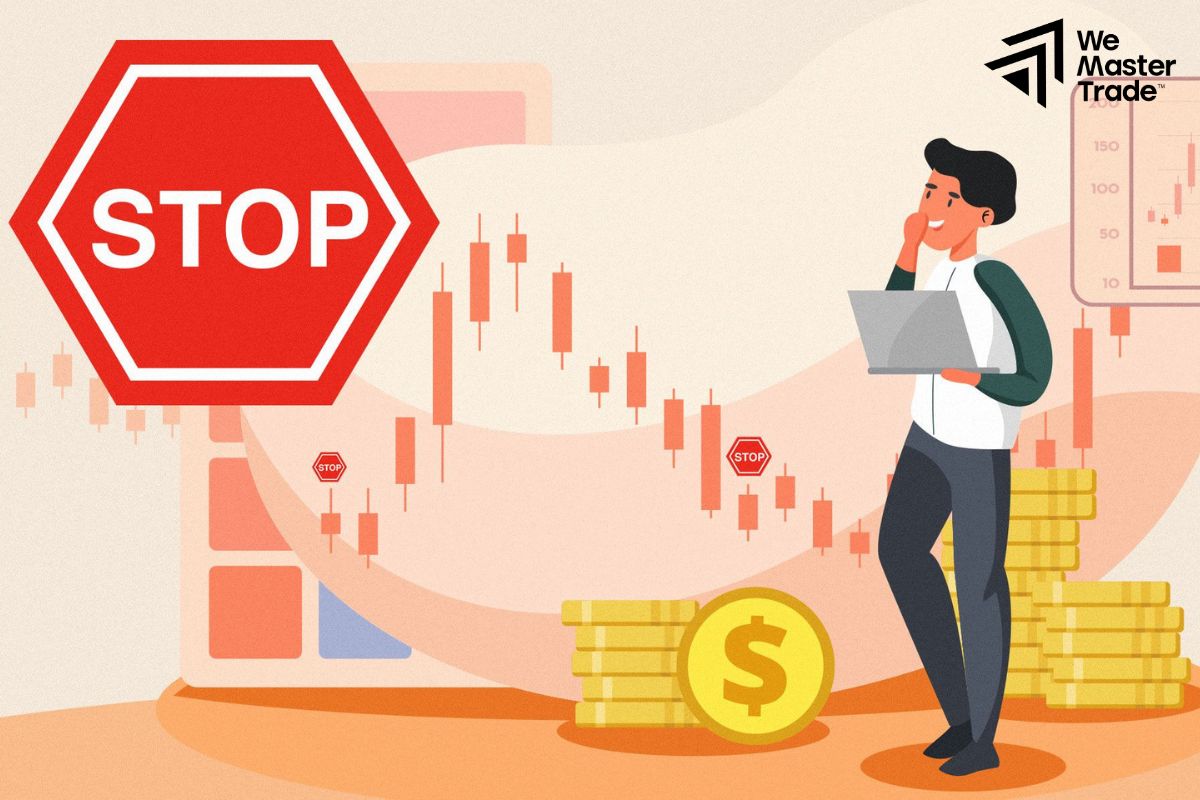
One emotional day can wipe out results. Set daily stop thresholds and rules to step away from the screen during losing streaks — this discipline helps preserve your competitive edge in forex.
30–60–90 Day Roadmap to Strengthen Your Edge
Day 1–30: Write SOP, choose 2–3 core metrics, start journaling, record costs by trading time frame to reinforce your competitive edge in forex.
Day 31–60: Test one improvement (e.g. change entry criteria or trade management). Start evaluating platform stability, consider a satellite broker if needed to protect your competitive edge in forex.
Day 61–90: Aggregate data, keep what works, drop noise. Finalize daily stop mechanism and special scenarios for big news — the decisive step to maintain your competitive edge in forex.
Conclusion
In short, the competitive edge in forex comes from a repeated process: write – measure – adjust – stay consistent. Whether you choose one broker or multiple, scalping or swing, the core is: understand constraints, standardize SOP, measure at least 2–3 metrics, and maintain discipline amid unpredictable volatility. Do these things well every day, and traders will see their competitive edge in forex grow thicker, more transparent, and more aligned with themselves.
See more: